Published on
ANU wildlife: native animals you might see on campus

At The Australian National University (ANU), we’re fortunate to have a green campus filled with native wildlife. You might see Australian wood ducks grazing on the lawns and near the streams, crimson rosellas flying through the trees, and, after dark, brushtail possums exploring the quieter areas.
Our Acton campus is home to over 10,000 trees, including old eucalypts that predate the foundation of ANU. With lawns, gardens and Sullivans Creek running through, there is lots of food and shelter for local wildlife. Here are some animals you might spot around our trees, paths and waterways.
Ducks, ducks and more ducks
The Australian wood duck is likely the first animal you’ll spot at ANU. These small, grey-brown ducks graze on the lawns, stroll across footpaths and settle in some of the busiest campus spots. They’re definitely not shy.
In spring, ducklings appear at Sullivans Creek. Watching the same duck families bobbing along during your walk to class is one of those little things that make uni days feel special.
Wood ducks share the creek with black swans, dusky moorhens, purple swamphens and Australasian coots. Between September and November, it’s best to give new duck families some space and use your camera’s zoom for close-ups

Ducks rule the ANU campus, and we love them for it.
Rosellas, king parrots and galahs
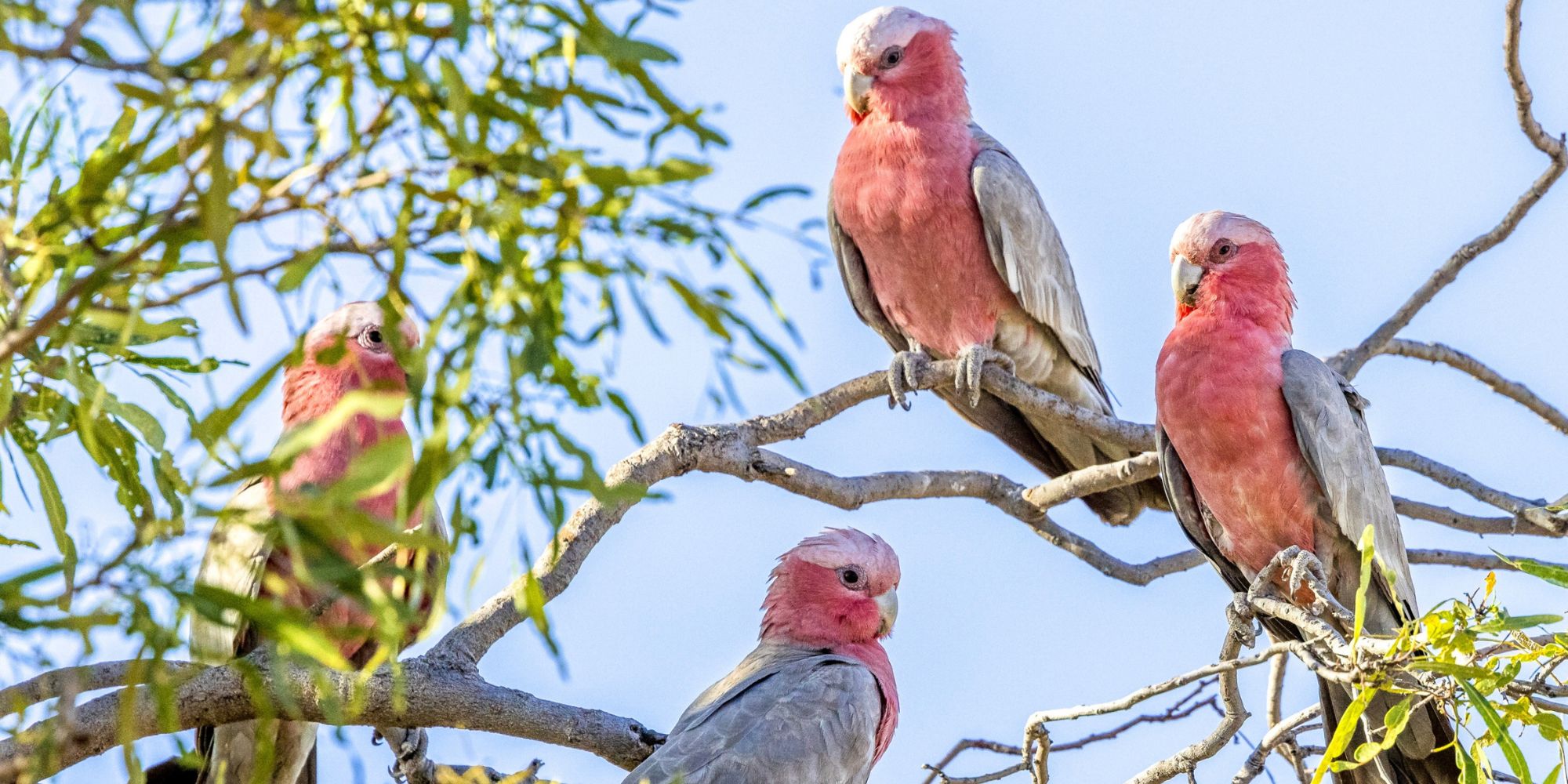
If you look up, you might spot a bright flash of colour in the trees. Crimson rosellas are common on campus, but their deep red and blue feathers always stand out. King parrots also visit, and galahs often gather on the lawns and ovals. After you notice them, even a short walk across campus becomes a chance to see which colourful bird is around that day.

At ANU, it’s a total parrot rainbow.
The clever cockatoos with campus figured out
Sulphur-crested cockatoos, known for their yellow mohawks, usually announce themselves by screeching and flapping their wings. They are very good at adapting to city life, which is what researchers at the ANU Research School of Biology are studying through the Clever Cockie Project.
The project tracks the unusual behaviours of cockatoos in Canberra and Sydney. These birds have learned to open bins and backpacks, time their foraging with human lunch breaks and pick up new habits from each other. Researchers watch cockatoos around Sullivans Creek and use citizen science sightings to see how they move around the city. One Canberra cockatoo might meet up to 500 other birds in a single day, forming different friendships and social groups.

Sulphur-crested cockatoos are clever, chaotic and very much part of life at ANU.
Listen up for the Canberra gang-gang
Gang-gang cockatoos are harder to spot. This slate-grey bird with a red head is the faunal emblem of the Australian Capital Territory (ACT), and Canberra is the only Australian city where you can reliably see them. That makes them pretty special.
Listen for their creaky call, which sounds a bit like a rusty gate or a cork being pulled. Gang-gangs are more likely to be seen flying around the city during the cooler autumn and winter months.

Loving gang-gang cockatoos makes you a proud Canberran.
Those magical magpies
Canberra’s magpies have strong family and social bonds. If you walk the same way to class often, they might even remember you. Pairs or groups defend their territory, call to each other and raise their young there. Around ANU, you can hear their melodic songs and, later in the season, the loud squawking of young magpies following their parents.
Spring shows their protective side. Only a small number of magpies swoop, but the ones that do make a good name for themselves. Fast-moving cyclists can attract particular attention, making bike helmets with long protruding cable ties one of the most fashionable campus accessories for the season.

Magpies are part of the ANU soundtrack, especially when spring arrives.
Possums after dark
If you’re on campus after sunset, you might spot a common brushtail possum moving along a fence or watching from a low branch. Smaller ringtail possums also live at ANU, but they are harder to see. Both species are here all year, and nest boxes around campus give them extra places to sleep during the day.
It’s best to watch possums from a distance, even though they look cute and cuddly. They need space to move, especially when they are jumping around the trees.

Have you ever heard a possum? You’ll know it when you do!
Our kangaroo friends
Can you see kangaroos at ANU? Sometimes. Eastern grey kangaroos are visitors, not regular residents. They live nearby on Black Mountain and in the Australian National Botanic Gardens, and sometimes cross over to campus when things quiet down at dusk. If you spot one, look for more, as they often travel in groups called ‘mobs’.

Kangaroos are a reminder that studying at ANU also means sharing space with the bush.
How to be a good campus neighbour
We love wildlife at ANU, and it’s important to remember that we share this space with the animals. They have just as much right to be here as we do. Some days you might hear a gang-gang croak, spot a kangaroo hopping by or see a family of ducks swimming by in Sullivans Creek.
The best way to enjoy campus wildlife is simple: watch and enjoy them respectfully. Keep your distance, don’t touch or feed the animals, and leave nests and young alone. And remember, sometimes the ducks really do have the right of way.

Read more about the stunning environment that surrounds our Acton campus in Canberra.