Published on
An inside look into the libraries at ANU

Five specialist libraries. Over 3.3 million bibliographic records. Sixty-three kilometres of shelving. Staff who have seen students tiptoeing through Chifley at 3am in their Ugg boots – and didn't bat an eye.
If your mental picture of a university library is still formed by hushed rooms, hostile shushing and fluorescent lighting, it's worth an update. We sat down with Tom Foley, Associate Director of Library Services at The Australian National University (ANU), to find out what students are actually walking into.
One campus, five unique libraries
Our libraries at ANU aren’t in a single building. There are five distinctly separate branches, each focused on a specific area and dotted all over campus. No matter where you are, there is a resource for you nearby.
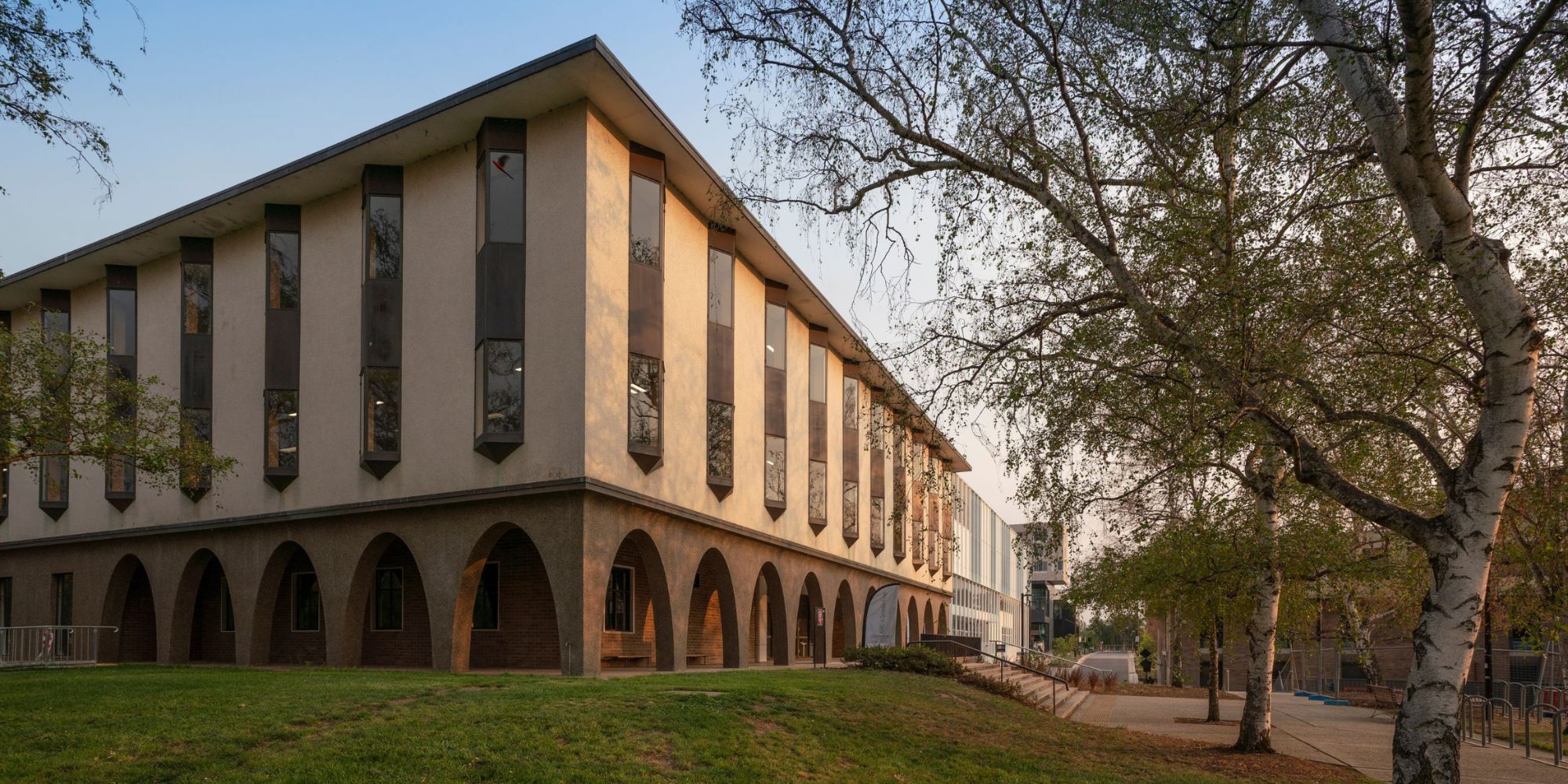
The Chifley Library covers arts, social sciences, business and economics. The Hancock Library has science, IT, engineering and medical resources. The Menzies Library, the first purpose-built library building on campus, focuses on the Asia-Pacific region and also holds our rare books and special collections. The Law Library carries the full range of legal resources, and the Art and Music Library supports students in the School of Art & Design and the School of Music – scores, LPs, exhibition catalogues and all.
Four out of five branches are open 24 hours a day, seven days a week. All you need to do is swipe your student card for access.
Tom puts it plainly: “It’s not unusual for staff to see students walking across the Chifley Library in their Ugg boots at 3am”. Which is to say – whatever time it is, and however badly you need an academic resource, you will be welcomed.
There’s more to our libraries than you may think
The ANU library system holds over 44,000 rare books, some dating back to the 15th century. The digital collection has 2.4 million downloads annually. And beyond campus, the ANU Print Repository — a secure off-site facility — holds the majority of the print collection across 3,300 square metres of floor space, with daily courier delivery to campus for anything you request.
Reflecting on these changes, Tom is direct about where things have shifted: "There's no doubt the world has transitioned from printed resources to digital ones over the past few decades. But our libraries still maintain respect for the printed word."
The digital side is strong due to an active digitisation program. Over 155,000 resources have been digitised so far. The team continues to add to that number. This includes research and teaching material by ANU staff. Much of it is freely available through ANU Press and the open research repository. Anyone anywhere can access it.

Looking for an academic resource? The ANU libraries have got your back.
How do you access ANU library resources?
Tom says it starts with your student number.
In terms of digitised resources, ANU has recently upgraded to a new online access system called Leganto. For new students: Leganto is the layer that connects your reading lists to the library catalogue, so when a lecturer assigns a reading, it links directly to the library's copy - including work that hasn't been formally published yet.
"It's opened up a whole new world of accessible learning for our students," Tom says.
Each library branch also has Macs, PCs and laptop loans available. And in case you were wondering about those 44,000 fragile, rare books, the library has a Treventus ScanRobot 2.0 that turns pages with air and scans up to 2,500 pages per hour, specifically so delicate materials don't have to be handled manually. It's a niche detail, but super cool (nerds, we know you love this as much as we do).
What are ANU libraries like inside?
One of the misconceptions we hear most often about libraries is that you need to be silent the entire time.
"Obviously, we have quiet zones," Tom says. "But we also have spaces that encourage socialisation and collaboration. Spaces where you can grab a coffee with a group of friends and debate politics, philosophise about scientific theory or marvel at the creativity of well-known musicians and artists."
There's also a practical side to this: the libraries have tea and coffee facilities and microwaves. When the Chifley Library flooded in 2018 and staff helped with the clean-up, opening long-closed drawers turned up frying pans and tins of baked beans. A library where students are comfortable enough to stash emergency supplies is not an unfriendly place.
Some students end up spending years in these spaces. Tom has seen it play out at graduation: "There have been lifelong relationships formed in our libraries. The evidence often comes out on graduation day when students come into spaces they've sat in for three, four, five years and have photos taken with their parents and their study partner -who is now their boyfriend or girlfriend."

Menzies was officially in 1963 by Her Majesty Queen Elizabeth II.
Some takeaways about libraries at ANU
- Four out of the five branches are open 24/7. Bring your student card for after-hours access
- The online-chat service (9am-5pm) connects you to a real staff member if you need quick help
- Student Ambassadors are available in-branch if talking to staff feels like too much at first
- Rare books can be requested for viewing – you don’t need a special reason, just ask
- If a resource isn’t on campus, you can request it through the catalogue and it will be delivered from the Print Repository.

The Hancock Library provides material from most areas of engineering, science, computing, cybernetics, technology and medicine.

For more study spots around Canberra, see our guide to cool places to study on and off campus.