Published on
When university isn’t just down the road

A conversation with Myrtleford-native first year student, George Whitford
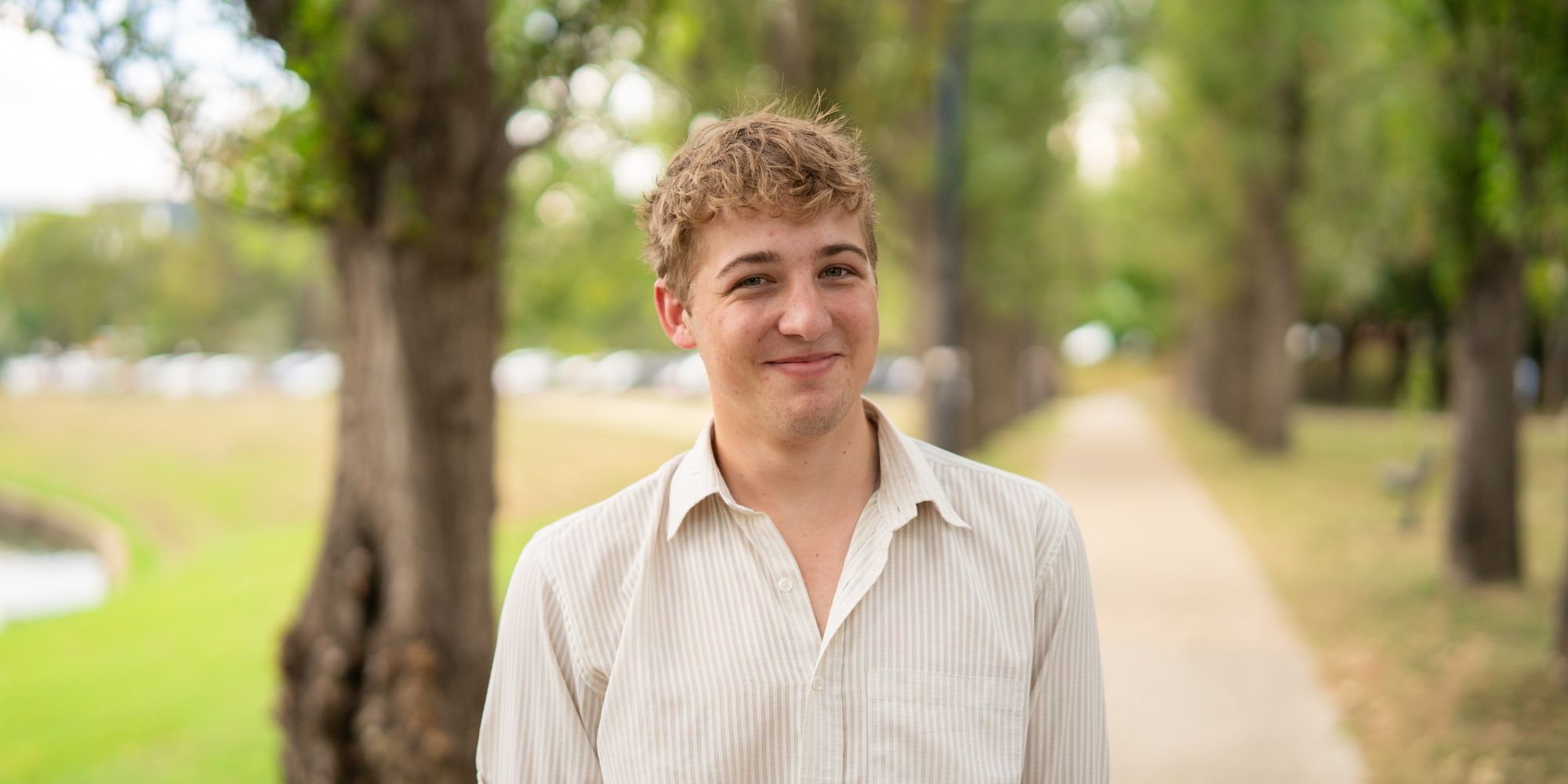
George Whitford grew up in Myrtleford, a small town at the foot of the Victorian Alps surrounded by bushland, forests and national parks. Community is central to Myrtleford, and people rarely leave.
But after George attended ANU Open Day, four and a half hours didn’t seem so far after all.
We sat down with George to talk about growing up rural, his work with the Rural Education Support Network (RESN), discovering ANU, and what it means when university isn’t just down the road.
Growing up rural
Q: How has coming from a rural background shaped you?
George: It’s made community and nature incredibly important to me.
In Canberra, I love that nature is embedded within the city. It’s not like Melbourne, where it can feel like a concrete jungle. Here, you can drive two minutes and be in bushland.
When I lived in Melbourne or overseas in Germany, what I missed most was the Australian bush. ANU has a real stillness to it – massive trees, creeks – something you don’t always get in a busy capital city. That connection to nature means a lot to me.
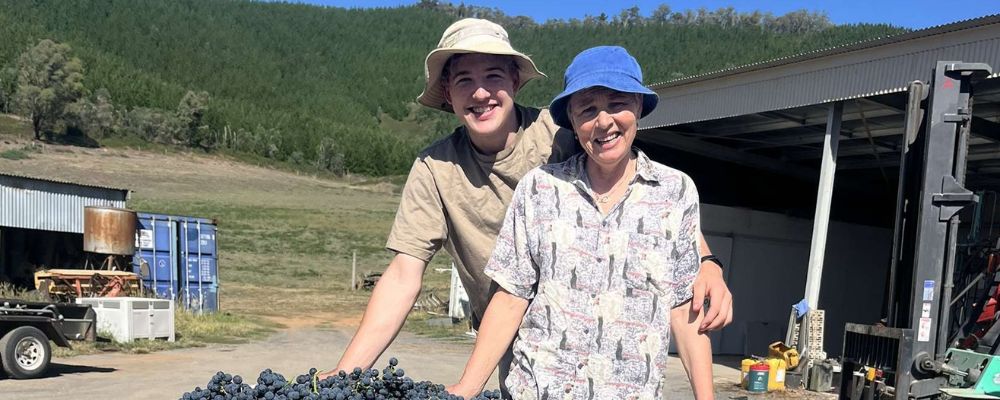
Image credit: George Whitford
On RESN
Q: Can you describe RESN and what they do?
George: RESN is an NGO working to eliminate the effects of geography on educational outcomes.
In simple terms, they support Year 11 and 12 students across rural and regional New South Wales and Victoria to access university opportunities. They sponsor students to attend Open Days – including ANU, Monash, La Trobe and others – covering accommodation and travel costs.
They also provide free tutoring in Maths and English to help students achieve their target ATARs.
I’m now involved with RESN as the School Partnerships Lead for New South Wales. I manage contact with partner schools and support communication between schools and RESN.
Q: How did RESN make ANU possible for you?
George: RESN sponsored me to attend the ANU Open Day. Without that sponsorship, I probably wouldn’t have gone. It’s a four-and-a-half-hour drive, and I didn’t even know when ANU Open Day was happening.
Being able to attend Open Day was probably the biggest factor in my decision to study at ANU. Seeing the campus, the culture and the students made it feel real.
After finishing school, I volunteered with RESN because I was so grateful for the support.
Open Day and choosing ANU
Q: What do you remember most about ANU Open Day?
George: The drive in. As we drove onto campus, gum trees and lakes appeared. I almost felt like we were leaving the city, not entering it. I couldn’t believe it was a university campus; it was so embedded in nature.
University Avenue and the club stalls were also memorable. Seeing all these niche clubs and interests made it feel easy to imagine finding a community.
Q: Was there a particular moment when you thought, “I could see myself here”?
George: Yes, during a guided campus tour.
I was by myself, which was a bit scary. But we went into a library with a beautiful view over the creek and gum trees. It felt rare to find that kind of environment in the capital city of a country.
That was the moment I thought: it’s not that different to Myrtleford. There’s nature, there are friendly people – why not?
Q: Did you consider any other universities?
George: I considered several Melbourne universities including Monash, Deakin and University of Melbourne. My siblings study in Melbourne, so it felt like the easy option.
Originally, Monash was my first choice. But it felt overwhelming – huge city, huge campus.
I also considered studying overseas. But after visiting ANU, I was swayed.
Q: What stood out to you academically about ANU?
George: I found the perfect degree: a double degree in Languages and International Relations. ANU offers flexible doubles, which really suited me.
Studying International Relations in Canberra, so close to Parliament, embassies and policy-making, makes sense. And ANU offers the widest range of languages in Australia. That was a huge factor in choosing to study here.
Advice for other rural students
Q: What would you say to other rural or regional students considering ANU?
George: Don’t let geography be a limiting factor.
Yes, the logistics can be tough. It’s scary moving somewhere new where you don’t know anyone. But that shouldn’t stop you from going to the place you want to study.
It’s easier than you think to find your community. You can do whatever you want if you’re willing to put in the effort.
In my Year 12 class of about 20 students, only two of us are currently at university. In rural communities, university isn’t always the default pathway. There aren’t always visible role models for it.
But rural students are just as capable as students in metropolitan areas, and they should have just as much opportunity.

Read more about ANU Open Day and what to expect.